What is HVAC? Structure, Principles and Documents about HVAC System
What is HVAC? Structure Principles and Documents about HVAC System | Perfect Aircon
In modern buildings and homes, maintaining a comfortable temperature and good air quality is very important. HVAC systems play a key role in this. At Perfect Aircon, we provide high-quality HVAC solutions for residential commercial and industrial spaces. In this blog we will explain what HVAC is how it works its structure basic principles and important documents related to HVAC systems.
What is HVAC Simple Words
HVAC stands for Heating Ventilation and Air Conditioning. It is a system that controls the temperature and air quality inside buildings. You can find HVAC systems in homes, offices, hospitals, factories and many other places.
Think of HVAC as the lungs of a building. Just like lungs help you breathe clean air, HVAC helps buildings get fresh air. It makes rooms warm in winter and cool in summer. It also removes bad smells and keeps air fresh.
Perfect Aircon has been installing and maintaining HVAC systems for many years. We make sure your indoor air stays comfortable and healthy all year round.
Why Do We Need HVAC Systems?
Before HVAC systems people had no control over indoor temperature. They felt hot in summer and cold in winter. Now HVAC systems solve these problems.
Here are the main reasons why HVAC systems are important:
- Comfort – HVAC keeps your home or office at the right temperature. You feel comfortable whether it is hot or cold outside.
- Health – Good air quality prevents sickness. HVAC filters remove dust, pollen and germs from the air.
- Productivity – Workers perform better in comfortable temperatures. Students learn better in cool classrooms.
- Equipment Protection – Computers and machines work better in controlled temperatures. Too much heat can damage electronics.
- Energy Saving – Modern HVAC systems use less electricity. They save money on power bills.
The Three Main Parts of HVAC
HVAC has three main functions. Let me explain each one:
Heating
Heating keeps buildings warm during cold weather. There are different ways to heat a building:
- Furnaces – These burn gas or oil to create heat. The heat travels through pipes to different rooms.
- Heat Pumps – These take heat from outside air and bring it inside. They work even when it feels cold outside.
- Boilers – These heat water and send hot water or steam through pipes.
- Electric Heaters – These use electricity to make heat. They are simple but can be expensive to run.
Ventilation
Ventilation means bringing fresh air inside and taking stale air outside. Without ventilation the air becomes stuffy and unhealthy.
- Natural Ventilation – This uses windows and doors. Air moves because of wind and temperature difference.
- Mechanical Ventilation – This uses fans to push air in and out. It works better than natural ventilation.
Good ventilation removes:
- Carbon dioxide from breathing
- Cooking smells from kitchens
- Moisture from bathrooms
- Dust and smoke particles
Air Conditioning
Air conditioning makes buildings cool and removes humidity. It has these main parts:
- Compressor – This is like the heart of AC. It pumps refrigerant through the system.
- Condenser – This releases heat outside the building.
- Evaporator – This absorbs heat from inside rooms.
- Expansion Valve – This controls how much refrigerant flows.
- Perfect Aircon specializes in all three areas. We design, install and service complete HVAC systems.
Structure of HVAC System
Every HVAC system has these main components:
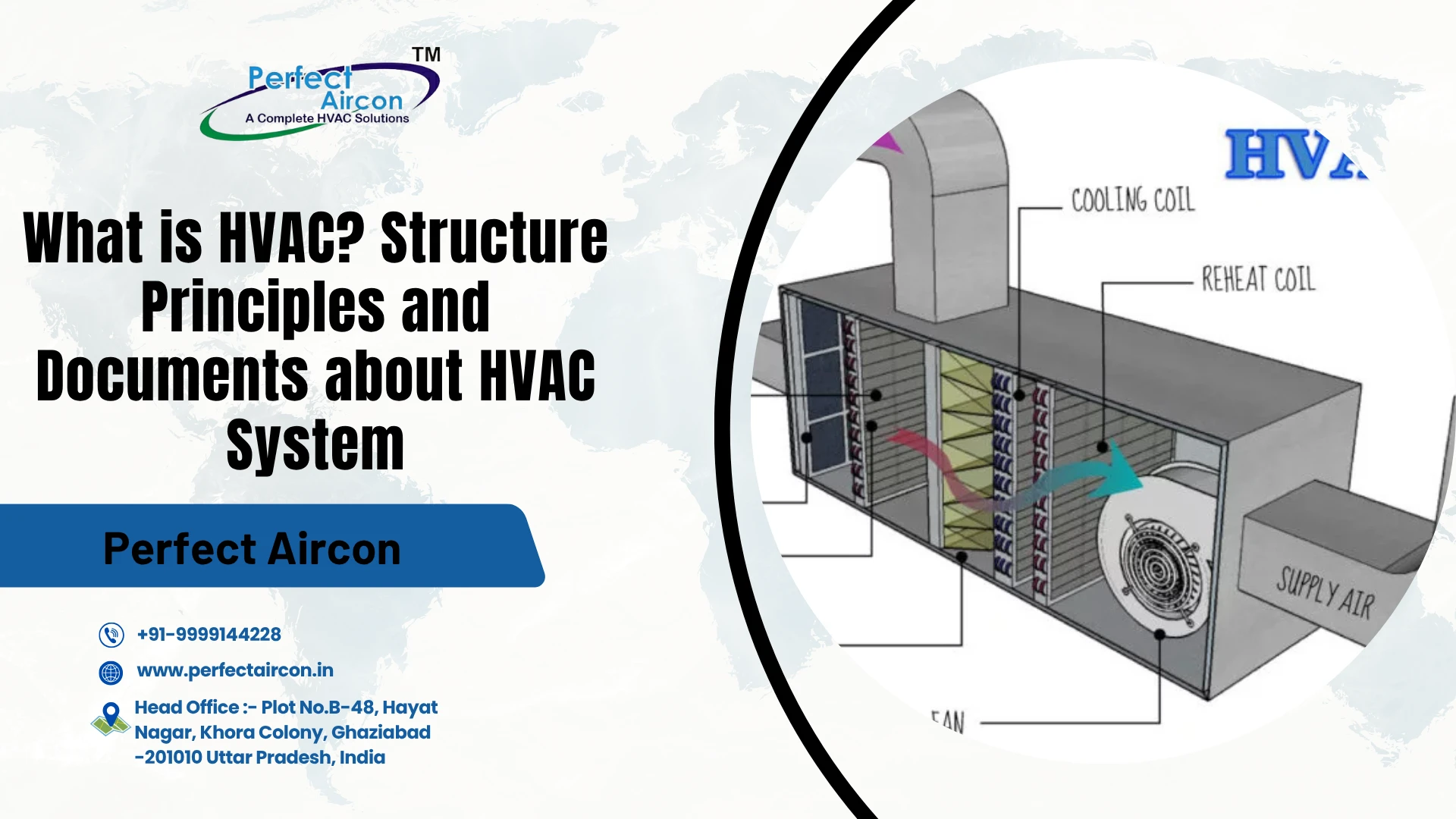
- Air Handler Unit (AHU) – This is a big box that contains fans, filters and heating or cooling coils. It pushes air through ducts to different rooms.
- Ducts – These are metal or plastic tubes that carry air. They run through walls and ceilings like veins in a body.
- Vents and Grilles – These are openings where air comes out or goes in. You see them on walls or ceilings.
- Thermostat – This is the control panel. You set your desired temperature here. The system automatically maintains that temperature.
- Filters – These catch dust and dirt. Clean filters are very important for good air quality.
- Refrigerant Lines – These copper pipes carry refrigerant between indoor and outdoor units.
- Outdoor Unit – For air conditioning this unit sits outside. It releases heat from inside the building.
- Control Panel – This has all the electrical controls and sensors.
HVAC System Specifications
Here is a table showing common HVAC specifications:
| Component | Specification Details |
| Cooling Capacity | 1 Ton to 100 Ton |
| Heating Capacity | 10000 BTU to 500000 BTU |
| Voltage | 220V Single Phase or 415V Three Phase |
| Refrigerant Type | R22, R410A, R32, R134a |
| Air Flow Rate | 400 CFM to 50000 CFM |
| Filter Type | HEPA, Carbon, Mesh, Electrostatic |
| Duct Material | Galvanized Iron, Aluminum, Fiber |
| Temperature Range | 16°C to 30°C |
| Humidity Control | 30% to 70% RH |
| Noise Level | 35 dB to 65 dB |
Perfect Aircon can customize these specifications based on your building size and needs.
Working Principles of HVAC
Let me explain how HVAC systems work in simple steps:
Cooling Process
Step 1 – The thermostat senses room temperature is too high.
Step 2 – It signals the system to start cooling.
Step 3 – The compressor pumps refrigerant to the evaporator coil.
Step 4 – Refrigerant absorbs heat from room air passing over the coil.
Step 5 – The fan blows this cooled air through ducts into rooms.
Step 6 – The refrigerant carries absorbed heat to the outdoor unit.
Step 7 – The outdoor unit releases this heat into outside air.
Step 8 – The cycle repeats until room reaches set temperature.
Heating Process
Step 1 – The thermostat detects room temperature is too low.
Step 2 – It activates the heating system.
Step 3 – The furnace or heat pump generates heat.
Step 4 – This heat warms up air in the air handler.
Step 5 – The fan pushes warm air through ducts.
Step 6 – Warm air comes out of vents into rooms.
Step 7 – Cold air returns to the system through return vents.
Step 8 – The system heats this air again and the cycle continues.
Ventilation Process
Step 1 – Exhaust fans remove stale air from inside.
Step 2 – Fresh air enters from outside through intake vents.
Step 3 – Filters clean this incoming air.
Step 4 – The air handler mixes fresh air with room air.
Step 5 – This mixed air gets heated or cooled as needed.
Step 6 – Clean conditioned air flows into rooms.
Types of HVAC Systems
Different buildings need different HVAC systems:
Split System
This is the most common type. It has two parts – one inside and one outside. The indoor unit has the evaporator and the outdoor unit has the compressor. This system works well for homes and small offices.
Central Air System
This system has one large unit that cools or heats the entire building. Air travels through a network of ducts. Big buildings like hospitals and malls use central air systems.
Packaged System
All components sit together in one box. This box usually goes on the roof. Small commercial buildings prefer packaged systems.
Ductless System
This system does not need ducts. Each room has its own indoor unit connected to an outdoor unit. It gives individual control for each room.
VRF System
VRF means Variable Refrigerant Flow. This advanced system can heat some rooms while cooling others at the same time. Hotels and large offices use VRF systems.
Perfect Aircon installs all types of HVAC systems. We help you choose the right type for your building.
Important Documents for HVAC Systems
When you install or maintain HVAC systems you need proper documentation:
Design Documents
-
- Load Calculation Sheet – This shows how much heating or cooling your building needs. Engineers calculate this based on building size, walls, windows and occupancy.
- Equipment Schedule – This lists all equipment with model numbers and specifications.
- Duct Layout Drawing – This shows where ducts will run through the building.
- Electrical Diagram – This shows all electrical connections and power requirements.
-
Installation Documents
- Installation Manual – This explains step by step how to install the equipment.
- Commissioning Report – After installation this report confirms everything works correctly.
- Test Results – These show temperature, pressure and airflow measurements.
As-Built Drawings – These show the actual installation. Sometimes installation differs from original plans.
Maintenance Documents
-
- Operation Manual – This explains how to run the system properly.
- Maintenance Schedule – This lists what maintenance tasks to do and when.
- Service Records – Every service visit gets recorded here with date and work done.
- Filter Change Log – This tracks when filters were changed.
-
Compliance Documents
- Building Permit – You need government permission before installing HVAC.
- Energy Certificate – This shows the system meets energy efficiency standards.
- Safety Certificate – This confirms the system is safe to use.
- Warranty Documents – These explain what is covered under warranty.
- Perfect Aircon provides all necessary documents with every installation. We keep proper records for future reference.
Benefits of Proper HVAC System
A well designed HVAC system gives many benefits:
- Better Air Quality – Filters remove pollutants. You breathe cleaner air and stay healthier.
- Consistent Temperature – Every room maintains the same comfortable temperature.
- Lower Energy Bills – Efficient systems use less electricity. You save money every month.
- Longer Equipment Life – Regular maintenance makes equipment last longer.
- Improved Sleep – Comfortable temperature helps you sleep better at night.
- Reduced Allergies – Clean filtered air reduces allergy symptoms.
- Prevents Mold – Humidity control stops mold growth in walls and ceilings.
- Quieter Operation – Modern HVAC systems make very little noise.
Common HVAC Problems and Solutions
Here are problems you might face and how to fix them:
- Problem: AC Not Cooling Solution: Check if filters are dirty. Clean or replace filters. Check if refrigerant is low. Call technician if needed.
- Problem: Unusual Noises Solution: Loose parts might be rattling. Worn belts might be squeaking. Get professional inspection.
- Problem: High Energy Bills Solution: System might be working too hard. Check for air leaks in ducts. Ensure proper insulation.
- Problem: Uneven Temperature Solution: Some rooms too hot and others too cold means duct problems. Check if all vents are open. Balance airflow.
- Problem: Bad Smells Solution: Dirty filters or mold in ducts cause bad smells. Clean system thoroughly. Change filters regularly.
- Perfect Aircon offers 24 hour emergency service. Call us anytime you face HVAC problems.
HVAC Maintenance Tips
Keep your HVAC system running smoothly with these tips:
- Change Filters Monthly – Dirty filters block airflow. Change them every month during heavy use.
- Clean Vents – Dust accumulates on vents. Vacuum them regularly.
- Check Thermostat – Make sure it shows correct temperature. Replace batteries if needed.
- Clear Outdoor Unit – Remove leaves and debris around outdoor unit. Keep two feet clearance.
- Schedule Annual Service – Get professional inspection once a year. Technicians catch problems early.
- Check for Leaks – Look for water leaks around indoor unit. Fix leaks immediately.
- Listen for Sounds – Unusual sounds mean something is wrong. Do not ignore strange noises.
- Monitor Energy Bills – Sudden increase in bills means system is not efficient.
Choosing the Right HVAC System
When buying a new HVAC system consider these factors:
- Building Size – Bigger buildings need bigger systems. Calculate your space accurately.
- Climate – Hot climates need stronger cooling. Cold climates need better heating.
- Budget – Good systems cost more initially but save money over time.
- Energy Efficiency – Look for high star ratings. More stars mean less electricity use.
- Brand Reputation – Choose reliable brands with good service networks.
- Noise Levels – Bedrooms need quieter systems than warehouses.
- Future Expansion – If you plan to expand your building get a system that can handle more load.
- Perfect Aircon provides free consultation. Our experts visit your site and recommend the best system for your needs.
Conclusion
HVAC systems are important for comfortable and healthy indoor environments. They control temperature, humidity and air quality. Understanding how HVAC works helps you use it better and maintain it properly.
Whether you need heating in winter or cooling in summer or fresh air all year round, HVAC systems do it all. Modern HVAC technology makes these systems more efficient and eco-friendly.
Good HVAC design and installation are crucial. Poor installation causes problems and wastes energy. Always hire experienced professionals for HVAC work.
Perfect Aircon brings years of experience in HVAC installation and maintenance. We use quality equipment and follow all safety standards. Our technicians are trained and certified.
We serve homes, offices, hospitals, factories and all types of buildings. From small split AC units to large central systems we handle everything.
If you are planning to install a new HVAC system or need maintenance for an existing one, contact Perfect Aircon today. We provide honest advice, quality work and excellent after-sales service.
Let us help you create the perfect indoor environment. Call Perfect Aircon now for a free quote and consultation.
About Perfect Aircon
Perfect Aircon is your trusted partner for all HVAC needs. We design, install, repair and maintain heating, ventilation and air conditioning systems. Our mission is to provide comfortable and healthy indoor environments for our customers. With professional service and competitive prices, Perfect Aircon is the right choice for your HVAC requirements.