A well-maintained HVAC system is essential for maintaining indoor comfort, air quality, energy efficiency, and reliable building operations. Offices need consistent cooling for employee productivity, hospitals require carefully controlled indoor environments, and industrial facilities depend on reliable ventilation and temperature management to support their processes.
Without regular inspections and servicing, HVAC equipment can develop airflow problems, refrigerant leaks, clogged filters, drainage issues, and unexpected mechanical failures. These problems may increase energy consumption, disrupt daily operations, and lead to expensive repairs.
Following a structured HVAC maintenance checklist helps facility managers identify potential issues before they become major problems. In this guide, we will cover essential maintenance tasks, preventive maintenance schedules, and practical ways to improve HVAC system performance with support from an experienced service provider like Perfect Aircon.
What Is Commercial HVAC Maintenance?
Commercial HVAC maintenance involves inspecting, cleaning, testing, and servicing heating, ventilation, and air-conditioning equipment installed in commercial and industrial buildings. Depending on the facility, the system may include chillers, air handling units (AHUs), ductwork, cooling towers, pumps, exhaust fans, filters, thermostats, and control systems.
Regular HVAC commercial maintenance helps keep these components operating as intended. It also allows technicians to identify worn parts, restricted airflow, abnormal operating conditions, and developing faults before they cause system downtime.
A planned maintenance approach is generally more effective than waiting for equipment to fail. It supports predictable maintenance costs, helps preserve equipment life, and can reduce interruptions to building operations.
Also Read: What Is a Chiller in HVAC? Types, Working Principle and Uses
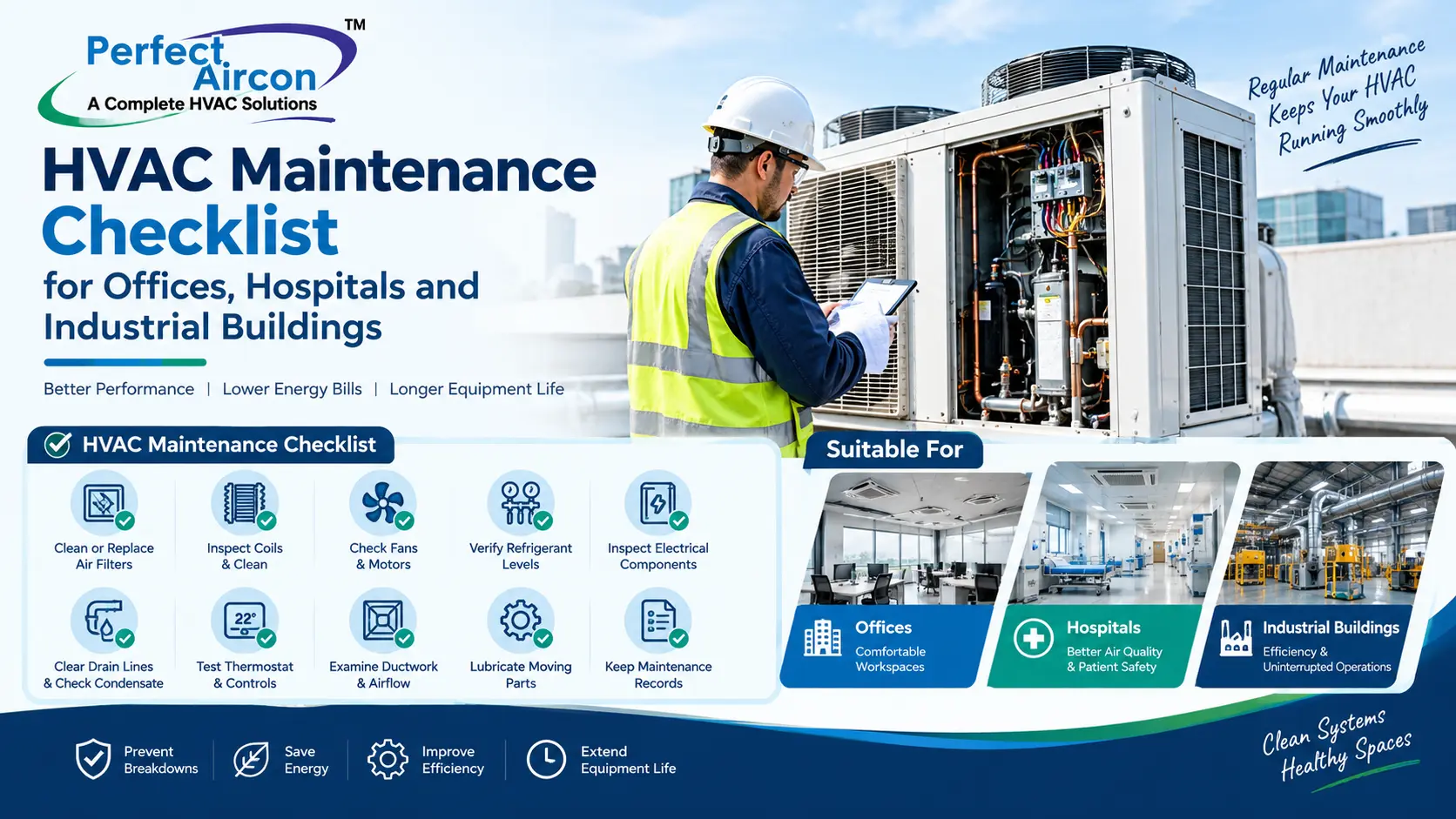
Commercial HVAC Maintenance Checklist
The following commercial HVAC maintenance checklist covers the major tasks that facility managers should include in their routine maintenance programme. Actual inspection intervals depend on equipment specifications, operating hours, environmental conditions, and manufacturer recommendations.
1. Inspect and Replace Air Filters
Air filters capture dust, airborne particles, and other contaminants before they enter the HVAC system. When filters become clogged, airflow can decrease and the system may need to work harder to deliver the required cooling or heating.
Maintenance tasks include:
- Inspecting filters for dust buildup, damage, and blockage.
- Cleaning reusable filters according to manufacturer instructions.
- Replacing disposable filters when required.
- Checking that filters are installed correctly and fit securely.
- Recording filter replacement dates.
Facilities with high occupancy, heavy dust loads, or continuous operating schedules may need more frequent filter inspections.
2. Clean Evaporator and Condenser Coils
Evaporator and condenser coils are important heat-transfer components. Dust, dirt, grease, and other deposits can reduce heat-transfer efficiency and affect cooling performance.
Technicians should inspect the coils, clean them using approved methods, and check for corrosion or physical damage. Outdoor condenser coils should also be checked for leaves, debris, and airflow restrictions.
For commercial chillers and larger air-conditioning systems, coil cleaning should be performed according to the equipment manufacturer’s guidelines.
3. Check Refrigerant Levels and Look for Leaks
Refrigerant is responsible for transferring heat within a refrigeration-based HVAC system. Incorrect refrigerant charge or leakage can reduce cooling capacity and affect equipment performance.
Maintenance professionals should review operating pressures and temperatures, check for signs of leakage, and investigate unusual cooling performance. Refrigerant should not simply be added without identifying the underlying cause of a suspected leak.
Only qualified technicians should handle refrigerants and perform repairs in accordance with applicable regulations and manufacturer procedures.
4. Inspect Fans, Motors and Belts
Fans and motors maintain airflow through air handling units, ventilation systems, and condenser assemblies. Worn belts, loose connections, damaged fan blades, or failing bearings can cause vibration, noise, and reduced airflow.
During inspection, technicians should:
- Check fan blades and motor condition.
- Inspect belts for wear, alignment, and correct tension.
- Look for unusual noise and vibration.
- Check motor operating conditions and electrical connections.
- Lubricate components where specified by the manufacturer.
These checks are particularly important in large commercial buildings and industrial facilities where ventilation equipment may operate for extended periods.
5. Check Drainage Systems
Air-conditioning equipment can produce condensate during cooling. If drain lines become blocked, water may overflow into ceilings, equipment rooms, or occupied areas.
Inspect drain pans, condensate pipes, traps, and pumps for blockages, leaks, and standing water. Clean the drainage system using approved procedures and confirm that condensate flows correctly.
Regular drainage inspections help reduce water damage, unpleasant odours, and moisture-related problems.
6. Inspect Electrical Components and Controls
Electrical faults can lead to equipment shutdowns, inefficient operation, and safety hazards. Maintenance personnel should inspect accessible wiring, terminals, contactors, protective devices, and control panels according to established safety procedures.
They should also verify thermostat operation, temperature sensors, control settings, and alarms. Building management system (BMS) readings can help identify abnormal temperatures, excessive equipment run time, and recurring faults.
Electrical work must be completed by appropriately qualified personnel using safe isolation procedures.
HVAC Maintenance Requirements for Different Buildings
Different facilities have different maintenance priorities. A suitable preventive maintenance programme should reflect the building’s purpose, occupancy, and operating conditions.
Office Buildings
Office HVAC systems need to maintain comfortable temperatures and adequate ventilation throughout occupied areas.
Important maintenance tasks include:
- Inspecting filters and cleaning air handling units.
- Checking thermostats and zone temperature controls.
- Inspecting supply and return air grilles.
- Reviewing ventilation and fresh-air delivery.
- Checking chilled-water systems, where installed.
- Testing control schedules and identifying unnecessary operating hours.
A consistent maintenance routine can help improve workplace comfort and reduce complaints about uneven cooling or poor airflow.
Hospitals and Healthcare Facilities
Hospitals may require more stringent HVAC monitoring because ventilation, pressure relationships, filtration, and temperature conditions can affect patient care and infection-control procedures.
Maintenance priorities include:
- Checking air handling units and filters according to the required specifications.
- Verifying room pressure relationships in designated areas.
- Monitoring temperature, humidity, and ventilation performance.
- Inspecting critical exhaust and ventilation systems.
- Recording maintenance activities and corrective actions.
- Coordinating servicing with hospital engineering and infection-control teams.
Operating theatres, isolation rooms, laboratories, and other specialised areas must follow their applicable healthcare standards and facility-specific requirements. Routine maintenance alone does not replace required validation, testing, or specialised environmental monitoring.
Industrial Buildings
Industrial HVAC systems may operate continuously and face dust, heat, chemical exposure, or other demanding conditions.
Key maintenance activities include:
- Inspecting industrial ventilation and exhaust systems.
- Cleaning coils and filters according to site conditions.
- Checking chiller performance and chilled-water circulation.
- Inspecting pumps, motors, bearings, and vibration levels.
- Verifying cooling performance for temperature-sensitive processes.
- Reviewing alarms and equipment operating data.
Maintenance plans should account for production schedules and the consequences of unplanned equipment downtime.
Commercial HVAC Preventive Maintenance vs Reactive Maintenance
Reactive maintenance takes place after equipment fails or develops a problem. Preventive maintenance involves planned inspections and servicing intended to reduce the likelihood of breakdowns.
A structured commercial HVAC preventive maintenance programme may include scheduled filter changes, coil cleaning, electrical inspections, drainage checks, control testing, and equipment performance reviews.
Similarly, commercial HVAC preventative maintenance focuses on reducing avoidable failures through routine care and timely corrective action. Both spellings are used in the industry, but the objective is the same: keeping HVAC equipment dependable and efficient.
| Maintenance approach | Main characteristics |
|---|---|
| Reactive maintenance | Repairs are performed after a fault or breakdown occurs. |
| Preventive maintenance | Inspections and servicing are scheduled at planned intervals. |
| Condition-based maintenance | Servicing is guided by equipment condition, measurements, and performance data. |
For most commercial facilities, a planned preventive programme combined with condition monitoring where appropriate provides a more organised approach than relying entirely on emergency repairs.
How to Create an HVAC Preventative Maintenance Plan
An effective HVAC preventative maintenance plan should be based on equipment requirements rather than a generic calendar alone.
Step 1: Prepare an equipment inventory. Record each unit’s location, model, capacity, installation date, and maintenance history.
Step 2: Establish inspection intervals. Use manufacturer recommendations, operating hours, environmental conditions, and applicable regulations to set appropriate schedules.
Step 3: Assign responsibilities. Identify the facility team, qualified technicians, and external HVAC service provider responsible for each task.
Step 4: Maintain service records. Document inspections, filter changes, repairs, test results, and replacement parts.
Step 5: Track equipment performance. Review energy use, recurring alarms, temperature variations, and maintenance costs to identify developing issues.
Step 6: Review and improve the plan. Update schedules after equipment changes, repeated faults, seasonal transitions, or changes in building occupancy.
This structured approach makes maintenance easier to track and helps managers prioritise equipment that is critical to building operations.
Benefits of Regular Commercial HVAC Maintenance
A properly managed maintenance programme offers several operational advantages.
- Improved energy efficiency: Clean filters, unobstructed coils, and correctly configured controls can help equipment operate more efficiently.
- Fewer unexpected breakdowns: Routine inspections help identify developing faults before they cause major disruptions.
- Better indoor comfort: Maintaining airflow and temperature controls helps reduce uneven cooling and occupant complaints.
- Longer equipment service life: Timely servicing can reduce avoidable wear on key components.
- Better maintenance planning: Documented inspections help facilities budget for repairs and planned replacements.
- Improved operational reliability: Regular servicing supports the cooling and ventilation requirements of commercial and industrial buildings.
Actual results depend on equipment condition, system design, operating practices, and the quality of maintenance performed.
Why Choose Perfect Aircon for HVAC Maintenance Support?
Maintaining commercial HVAC equipment requires an understanding of air-conditioning systems, ventilation, controls, and the operating needs of each facility. Perfect Aircon provides a relevant point of contact for businesses looking to discuss their HVAC requirements and maintenance needs.
Before selecting a service provider, confirm the scope of work, equipment coverage, technician qualifications, inspection frequency, emergency support arrangements, and reporting procedures. A clearly defined maintenance agreement helps facility managers understand which tasks are included and how equipment issues will be handled.
Contact Perfect Aircon to discuss your building’s HVAC requirements and explore suitable maintenance support for your facility.
Frequently Asked Questions (FAQs)
1. How often should commercial HVAC systems be maintained?
Inspection frequency depends on equipment type, operating hours, environmental conditions, and manufacturer recommendations. Filters and critical equipment may require more frequent checks, while other tasks can be scheduled at longer intervals.
2. What should be included in a commercial HVAC maintenance checklist?
A typical checklist covers air filters, coils, refrigerant circuits, fans, motors, drainage, electrical components, thermostats, controls, and equipment performance. Specialised systems may require additional inspections.
3. Why is commercial HVAC preventive maintenance important?
Preventive maintenance helps identify potential problems early, supports energy-efficient operation, reduces avoidable breakdowns, and makes repair costs easier to plan.
4. Do hospitals need a different HVAC maintenance plan?
Yes. Hospitals may require additional monitoring of ventilation, filtration, pressure relationships, temperature, and humidity in specialised areas. Maintenance must follow applicable standards and facility-specific protocols.
5. Can regular HVAC maintenance reduce energy consumption?
It can help. Clean filters and coils, correct control settings, and properly maintained components can improve system performance. Actual energy savings depend on the condition and design of the HVAC system.
Conclusion
A well-planned HVAC maintenance checklist helps offices, hospitals, and industrial buildings maintain dependable cooling, ventilation, and indoor environmental conditions. Regular inspections, timely servicing, accurate records, and a clearly defined maintenance schedule can reduce avoidable equipment problems and support better operational planning.
By implementing commercial HVAC preventive maintenance and developing a practical HVAC preventative maintenance plan, facility managers can take a more proactive approach to equipment performance and long-term maintenance costs.
For professional guidance on commercial air-conditioning and HVAC requirements, contact Perfect Aircon to discuss a maintenance approach suited to your building and operational needs.