As temperatures rise during the summer months, your HVAC system works harder to keep your home, office, or commercial space cool and comfortable. Without proper maintenance, even a high-quality air conditioning system can lose efficiency, consume more electricity, and develop unexpected breakdowns. That’s why following a summer AC maintenance routine before peak season begins is essential.
A well-maintained HVAC system not only delivers consistent cooling but also improves indoor air quality, extends equipment life, and reduces costly repair expenses. Whether you own a residential air conditioner or manage a commercial HVAC system, preventive maintenance can save both time and money.
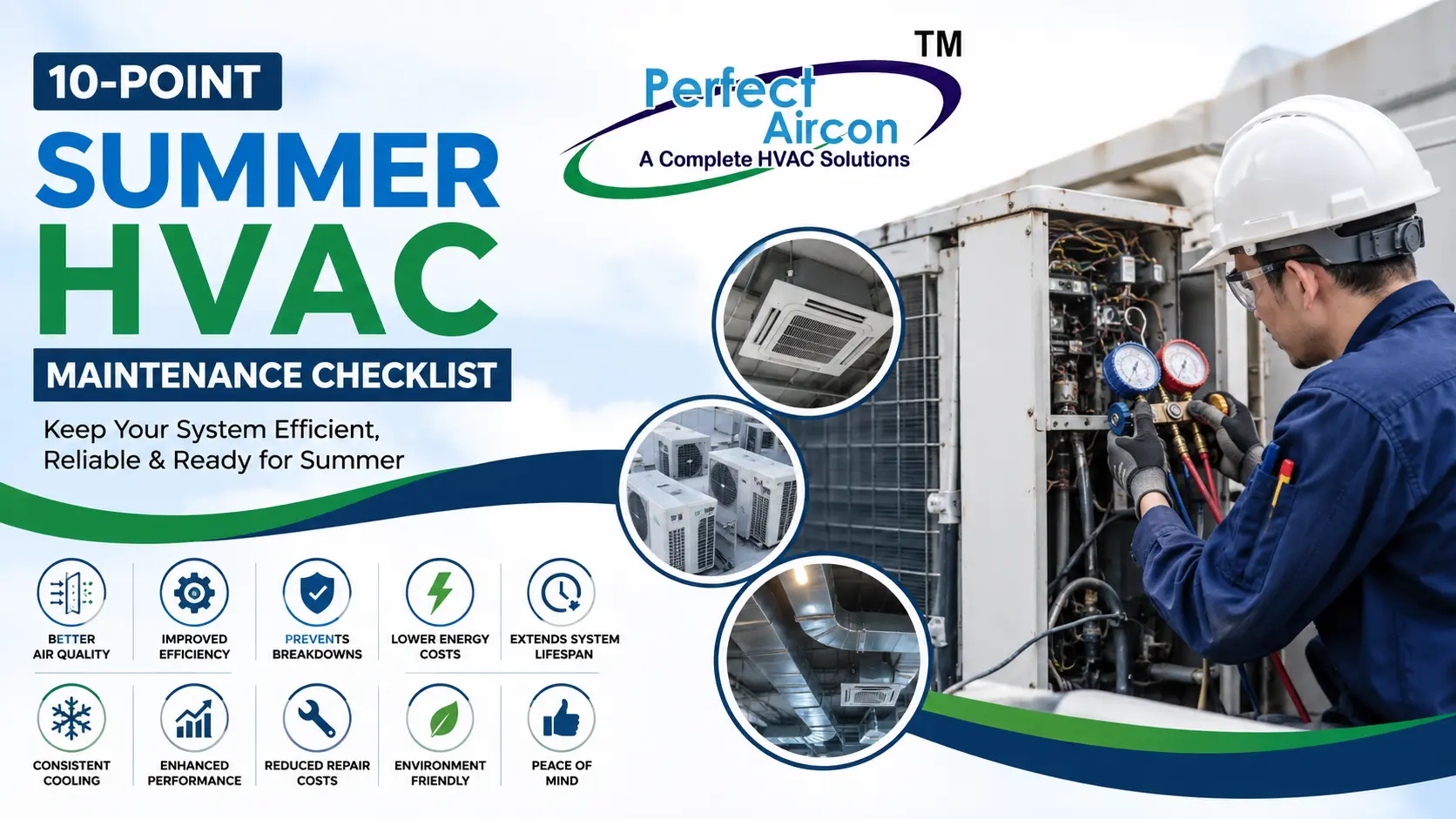
In this guide, we’ll walk you through a practical 10-point summer HVAC maintenance checklist that helps keep your cooling system operating at peak performance throughout the hottest months of the year.
Why Summer HVAC Maintenance is Important
Your HVAC system runs continuously during summer, making it more vulnerable to wear and tear. Dust accumulation, clogged filters, low refrigerant levels, and dirty coils can significantly reduce cooling efficiency.
Regular HVAC summer maintenance offers several benefits:
- Improves cooling performance
- Reduces electricity consumption
- Prevents unexpected system failures
- Increases equipment lifespan
- Improves indoor air quality
- Lowers repair and maintenance costs
- Maintains consistent airflow
- Enhances overall system efficiency
Scheduling preventive maintenance before summer begins ensures your air conditioning system is ready to handle high temperatures without interruptions.
Also Read: How Duct Shape Affects Airflow: Round vs. Rectangular vs. Oval
1. Clean or Replace Air Filters
Air filters are one of the most important components of an HVAC system. Dirty filters restrict airflow, forcing the system to work harder than necessary.
During summer AC maintenance, inspect filters every month and replace or clean them as recommended by the manufacturer.
Benefits include:
- Better cooling
- Improved indoor air quality
- Reduced energy consumption
- Longer HVAC system life
Clean filters also help reduce dust, allergens, and airborne pollutants inside your property.
2. Inspect the Outdoor Condenser Unit
The outdoor condenser unit is constantly exposed to dust, leaves, dirt, and debris.
During summer HVAC maintenance, ensure that:
- The condenser is free from leaves and grass.
- Airflow around the unit is unrestricted.
- Fins are clean and undamaged.
- There are no visible signs of corrosion.
Maintaining proper airflow allows the condenser to release heat efficiently and improves overall cooling performance.
3. Clean Evaporator and Condenser Coils
Dirty coils reduce the system’s ability to transfer heat effectively. Over time, dust and dirt create an insulating layer that forces the compressor to work harder.
Professional coil cleaning helps:
- Improve cooling efficiency
- Lower electricity bills
- Prevent compressor overload
- Increase equipment lifespan
Coil cleaning is one of the most valuable tasks included in any summer AC maintenance plan.
4. Check Refrigerant Levels
Low refrigerant levels are one of the most common reasons for poor cooling performance.
Signs of low refrigerant include:
- Warm air from vents
- Ice formation on pipes
- Longer cooling cycles
- Increased electricity bills
A qualified HVAC technician should inspect refrigerant pressure, identify leaks, and recharge the system only if required.
5. Inspect Electrical Components
Electrical faults can lead to sudden HVAC failures.
During maintenance, technicians should inspect:
- Wiring connections
- Capacitors
- Contactors
- Circuit breakers
- Electrical terminals
- Safety controls
Loose electrical connections not only reduce efficiency but can also become serious safety hazards.
6. Check Thermostat Performance
Your thermostat controls the entire cooling system.
Ensure that:
- Temperature readings are accurate.
- Programming schedules are working correctly.
- Smart thermostat settings are optimized.
- Batteries are functioning properly.
A properly calibrated thermostat improves comfort while preventing unnecessary energy usage.
7. Inspect Drain Lines and Condensate System
As your air conditioner removes humidity from indoor air, water flows through the condensate drain line.
Blocked drain lines can cause:
- Water leakage
- Ceiling damage
- Mold growth
- Increased indoor humidity
Cleaning the drain line during HVAC summer maintenance helps prevent these issues and keeps the system operating safely.
8. Lubricate Moving Parts
Many HVAC components contain moving parts that require proper lubrication.
These include:
- Fan motors
- Bearings
- Blower assemblies
- Motor shafts
Proper lubrication reduces friction, minimizes wear, lowers noise levels, and improves overall system efficiency.
9. Inspect Air Ducts and Airflow
Even the most efficient air conditioner cannot perform well if airflow is restricted.
Check for:
- Dust accumulation inside ducts
- Air leaks
- Blocked vents
- Damaged duct insulation
Clean and properly sealed ducts improve cooling efficiency while maintaining balanced airflow throughout the building.
10. Schedule Professional HVAC Inspection
Although homeowners can perform basic maintenance, a complete professional inspection is highly recommended before summer begins.
An experienced HVAC technician can:
- Test system performance
- Measure cooling efficiency
- Inspect compressors
- Check refrigerant pressure
- Clean internal components
- Detect potential issues before they become expensive repairs
Annual servicing provides peace of mind and helps prevent emergency breakdowns during peak summer.
Additional Summer AC Maintenance Tips
Besides routine servicing, you can improve HVAC performance by following these simple practices:
- Keep doors and windows closed while the AC is running.
- Use curtains or blinds to reduce heat gain.
- Avoid placing heat-generating appliances near the thermostat.
- Keep furniture away from air vents.
- Replace filters regularly during heavy usage.
- Schedule servicing before the hottest months begin.
These small habits can significantly improve cooling efficiency while reducing operating costs.
Common Signs Your HVAC System Needs Maintenance
Don’t ignore warning signs that indicate your HVAC system requires immediate attention.
Watch for:
- Weak airflow
- Poor cooling
- Unusual noises
- Bad odors
- Frequent on/off cycling
- Water leakage
- High electricity bills
- Uneven room temperatures
Addressing these issues early can prevent major repairs and improve system reliability.
Benefits of Regular HVAC Summer Maintenance
Investing in routine maintenance provides long-term value for homeowners and businesses alike.
Key benefits include:
- Higher energy efficiency
- Lower electricity costs
- Improved cooling performance
- Cleaner indoor air
- Fewer emergency repairs
- Longer equipment lifespan
- Enhanced occupant comfort
- Better return on investment
Preventive maintenance is always more affordable than repairing a major HVAC failure during peak summer.
Conclusion
A proactive 10-point summer HVAC maintenance checklist is one of the best ways to ensure reliable cooling, improved energy efficiency, and uninterrupted comfort throughout the hottest season of the year. From cleaning filters and inspecting coils to checking refrigerant levels and scheduling professional servicing, each maintenance step contributes to the long-term performance of your HVAC system.
Perfect Aircon provide professional summer AC repair, installation and maintenance, preventive servicing, HVAC inspections, installation, repair, and annual maintenance solutions for residential, commercial, and industrial air conditioning systems. Our experienced technicians help keep your HVAC equipment operating efficiently so you can enjoy worry-free cooling all summer long.